

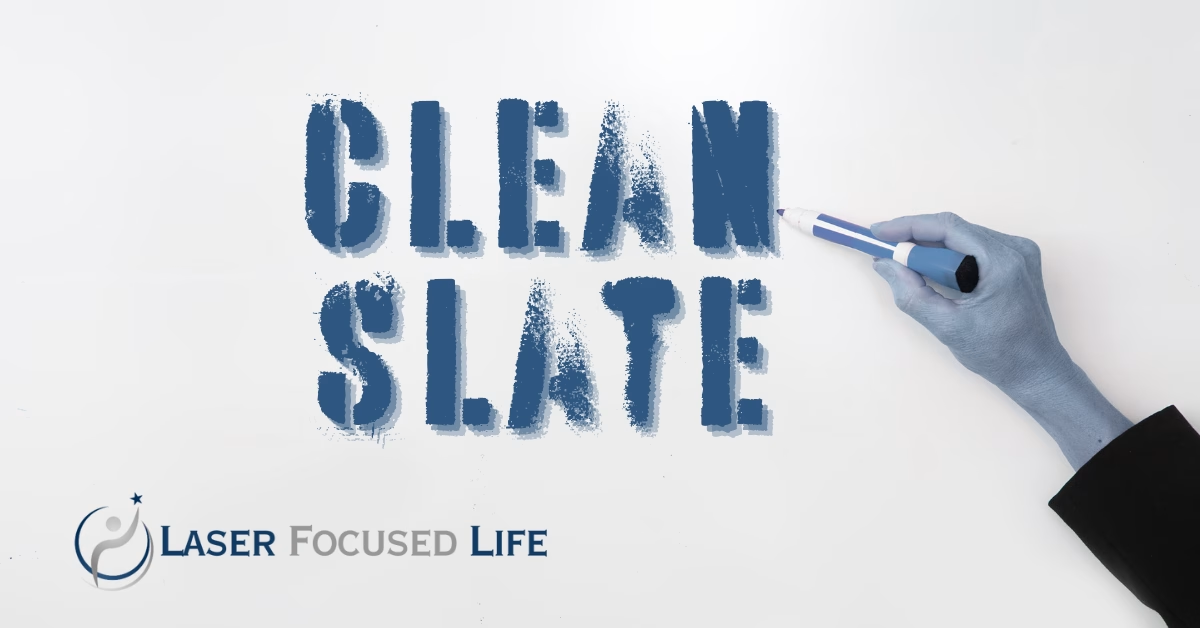
It was the first week of January a few years ago when I noticed the old whiteboard hanging in my office. The surface was streaked with faint outlines of forgotten to‑do lists, half‑formed goals, and reminders that were once urgent. I had written plans on it the previous January, full of energy and ambition. Yet twelve months later, many of those goals remained unfinished, quietly marking what I perceived as missed opportunities. I picked up a cloth to clean it. As the words disappeared, I felt the sting of disappointment—until something unexpected happened.
When I stepped back and looked at that blank whiteboard, I felt lighter. A clean board meant a clean start. It silently asked, “What will you write next?”
That small moment became a metaphor for my life, and it might be for yours too. A blank surface is an invitation, not a judgment. It does not shame you for what you left undone. It simply gives you room to begin again.
This is what I call The Clean Slate Policy. It is more than a motivational phrase. It is a mindset designed to help you release the past, refocus on what matters, and re‑enter your life with clarity and hope.
Why We Struggle to Begin Again
Most people do not hold themselves back because they lack ambition. They hold themselves back because they carry guilt, shame, or the false belief that failure defines them. Think about it. How many dreams have you delayed because of regret from a previous setback? How often have you hesitated to try again because you were afraid the outcome would repeat itself?
The past can become a heavy lens that distorts possibility. The Clean Slate Policy removes that lens. It reminds us that the past is reference material, not a residence. It is where we learn, but not where we live.
Let me share a story that captures this truth in real life.
The Story of Emma’s Second Beginning
Emma was a project manager at a growing tech firm. She cared deeply about her work but had spent most of the year battling burnout. Long hours, unmet goals, and a constant sense of falling short left her exhausted. When performance review time came, her supervisor praised her diligence but pointed out that she often avoided risk and hesitated to take initiative.
That feedback stung. Emma drove home that evening feeling small. She sat in her driveway replaying every missed chance to speak up, every project where she settled for “good enough.” The year felt wasted.
A few days later, while cleaning her workspace for the new year, she came across her old leather notebook. On the inside cover, she had scribbled something months earlier: Start where you are. Do what you can. Carry on.
Start where you are. Do what you can. Carry on.
Those words hit differently now. She realized she did not have to erase everything that went wrong. She simply needed to start where she was—with the lessons, not the burden. Within a week, she met with a mentor to reassess her goals. Instead of chasing perfection, she committed to three small changes: take daily reflection breaks, delegate more intentionally, and pitch one original idea every month.
By June, Emma felt renewed focus and authentic confidence. Her clean slate was not a new job or a new strategy. It was a new mindset—permission to begin again without apology.
The Meaning Behind The Clean Slate Policy
The Clean Slate Policy is a decision to reset mentally, emotionally, and practically. It invites you to acknowledge the past without carrying it as a limitation. Here is how it works at its core:
-
Release the Past: You cannot build tomorrow with the tools of guilt. We are shaped by experience but not defined by it. The first step is acknowledging what needs forgiveness—both for yourself and for others. Remember, forgiveness is not saying the past was acceptable. It is saying it will no longer control your peace.
-
Redefine the Present: Once you let go, you must decide where you truly are. What resources, relationships, and opportunities do you have today? Starting “where you are” grounds you in reality, not regret. From here, you can identify your next right step.
-
Reignite the Future: A clean slate invites vision. It asks you to look forward with renewed curiosity. The chapters of your past have shaped your wisdom. The blank page ahead represents the story you still get to write.
Think of the policy as a personal agreement: I will not allow yesterday’s outcome to dictate tomorrow’s effort.
Every great leader, athlete, or artist practices their version of this principle. They know progress does not come from perfect histories but from the courage to begin again—every single day.
The Role of Reflection
The clean slate is not ignorance of what came before. Reflection converts experience into wisdom. Take time to ask:
- What did last year teach me about perseverance?
- Which habits helped me grow, even slightly?
- Where did I let fear silence my voice?
- Who stood beside me during my hardest moments?
Writing these answers clarifies what should carry forward and what can stay behind. You will see patterns of growth hiding beneath the frustration. You might even notice that moments you called “failures” were simply lessons delivered early.
Building a Year That Reflects Your New Beginning
When you apply The Clean Slate Policy, the next step is intentional creation. Start crafting the new year with clarity and care.
-
Define Your Vision. Set goals that connect to purpose, not pressure. What kind of person do you want to become by the end of this year? Let your answer shape your goals.
-
Develop Consistent Habits. Big results are built from small repetitions. Choose habits that move the needle daily. Read before your first email. Review your goals at lunch. End each day by listing one win and one lesson.
-
Design Your Environment. Surround yourself with inspiration and accountability. Join a community or mastermind that supports growth. Remove physical clutter that distracts you. Create visual reminders of your goals.
Each step reinforces the mindset that progress begins now.
From Theory to Practice: Living Out a Clean Slate
The policy takes root through daily choices. Imagine beginning each morning by saying, “Today is another blank page.” You would approach mistakes differently. You would respond to conflict with perspective instead of defensiveness. You would stop seeking perfection and start building resilience.
A clean slate does not require a calendar change. It can happen in June, on a random Thursday afternoon, or right after a difficult conversation. The moment you release the old weight, the slate clears.
You can use this reset anytime. The world might still remember what you did, but your mind and heart can choose to move forward unfettered.
The Deeper Lesson of Grace
At its heart, the Clean Slate Policy is a grace policy. Grace means giving yourself permission to grow at a human pace. It honors your past yet refuses to let it rule you. It reminds you that progress is not linear. There will be days that feel like setbacks. There will be mornings when you want to quit. On those days, grace invites you to start small again.
Grace is the soil where transformation takes root. It turns guilt into gratitude and pressure into possibility. It allows you to lead with authenticity instead of fear.
When you view life through that lens, every new year, month, or week becomes an open door. You do not need a perfect plan to walk through it. You only need courage and intention.
Beginning Your Clean Slate Year
As this new year unfolds, pause and ask: What will your clean slate look like?
Imagine your whiteboard cleared and ready. What words deserve to be written first?
Perhaps it is a word like focus or joy. Maybe it is discipline, faith, or peace. Choose one idea that anchors your choices for the months ahead.
Then imagine a year guided by that single principle. How would your mornings look? How would your leadership evolve? How might your relationships deepen? The clean slate offers not just potential but responsibility—the responsibility to write well.
Final Thoughts
The Clean Slate Policy is not an escape from the past. It is a declaration of ownership. The past loses its power when you decide to use it as fuel instead of evidence against yourself. History becomes a mentor rather than a critic.
You can begin again, right now. You can release what has expired, reclaim what matters, and rebuild from a place of hope.
This January, do not only celebrate the new year. Create a new way of being in it.
Let today be the line where the old story ends and the next begins. Let it be the moment you pick up the pen, take a deep breath, and write the next sentence with bold, steady faith in what is possible.
If you are ready to create your own clean slate in 2026 and build a life of clarity, direction, and calm focus, I would love to walk alongside you. Schedule a Call today, and together we can design the strategy, structure, and support you need to turn this blank page into your most purposeful year yet.


0 Comments